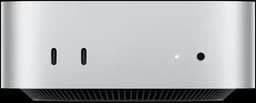
In 2026, OpenClaw emerged as one of the most significant open-source AI projects, transforming how people interact with AI through everyday messaging platforms. Originally gaining viral attention under different names, OpenClaw has grown into a mature, extensible AI agent framework that runs natively on macOS — creating an unprecedented demand for Mac Mini hardware and fueling a global shortage.
The Rise of OpenClaw: From Viral Project to Essential Tool
OpenClaw started as a simple experiment: an AI agent that could respond to messages across multiple platforms. What made it unique was its ability to integrate with iMessage — something only possible on macOS. Combined with Apple Silicon's Neural Engine for fast local inference, OpenClaw delivered an AI assistant experience that cloud-only solutions couldn't match. Word spread quickly through developer communities, and within months, OpenClaw became one of the most starred projects on GitHub. Businesses adopted it for customer support automation, individuals used it as a personal AI assistant, and developers extended it with custom plugins for everything from appointment scheduling to e-commerce management.
The Mac Mini M4 Shortage: Why Hardware Became Scarce
OpenClaw's requirement for macOS hardware created a surge in Mac Mini demand that Apple's supply chain couldn't absorb. The Mac Mini M4, with its efficient Neural Engine and compact form factor, became the ideal host for OpenClaw deployments. Prices on secondary markets skyrocketed, and waiting times for new units extended to months. For businesses wanting to deploy OpenClaw, the hardware shortage became a critical bottleneck — you couldn't run the software without the hardware, and the hardware simply wasn't available at reasonable prices or timeframes.
Cloud Mac Mini: The Solution to the Hardware Shortage
Cloud Mac Mini rental services like Macly emerged as the natural solution to the OpenClaw hardware problem. Instead of waiting weeks for a Mac Mini to arrive (at inflated prices), users can provision a cloud Mac Mini in minutes and have OpenClaw running within the hour. The economics are compelling: a dedicated cloud Mac Mini costs a fraction of purchasing hardware, includes gigabit internet connectivity, 24/7 uptime monitoring, and eliminates the maintenance burden of running your own server. For most OpenClaw deployments, cloud hosting is not just more convenient — it's more cost-effective.
Cost Comparison: Buying vs. Renting a Mac Mini for OpenClaw
A Mac Mini M4 retails for $599+ (when available), but shortage-driven secondary market prices often exceed $800-1000. Add electricity costs, internet bandwidth, and the time spent on maintenance, and the total cost of ownership rises significantly. In contrast, a cloud Mac Mini on Macly starts at $14.99/month with no upfront cost, includes gigabit connectivity, 24/7 monitoring, and professional data center infrastructure. For OpenClaw deployments that need to run continuously, cloud hosting typically breaks even within 2-3 months while providing superior reliability and connectivity.
OpenClaw has fundamentally changed how people think about AI assistants — moving from cloud-only chatbots to self-hosted, multi-platform agents that users truly own and control. As the project continues to evolve with new features and platform integrations, the demand for Mac Mini hosting will only grow. Cloud Mac Mini services bridge the gap between OpenClaw's hardware requirements and users' need for instant, hassle-free deployment.